
'Neither do the Israelis. The two attacking parties have very little economic interest in Hormuz.'

It remains unclear whether United States President Donald Trump or Iranian authorities will pursue the offer.
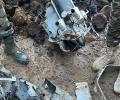
Local residents said a migrant labourer was injured in the incident, while a few houses in the area also sustained damage. Parts of the unidentified object were lying in the area, they said.

India's handling of the Iran crisis reflects a growing strain between strategic autonomy and geopolitical alignment, observes Ambassador M K Bhadrakumar.

The question is whether the clocks allow enough time for two deeply mistrustful sides to get there, and whether the surface calm holds long enough for the paddling to produce something before the ceasefire ends on April 22, notes Prem Panicker in his must read blog on the Iran War.

The core issues to be settled -- access to Hormuz, Israel's aggression in Lebanon, the question of Iran's nuclear programme, sanctions relief and compensation -- are thorny enough to require weeks of patient negotiation. The most likely outcome of the opening sessions is that both sides take the measure of each other, establish what is and is not negotiable, and return home without having broken anything. That would count as progress.

The Indian embassy in Tehran has earlier stated that it is facilitating the safe movement of nationals who wish to leave Iran.

Trump seems to have estimated that Ghalibaf is a pragmatic politician who is receptive to close relations with the US and is enthusiastic about fostering business and economic ties in particular, points out Ambassador M K Bhadrakumar.

Afghanistan's anti-doping programme has collapsed since the Taliban's return to power, with no tests conducted for three years and the country's exiled anti-doping chief admitting there is currently 'no hope'. The programme faces numerous challenges, including a lack of Doping Control Officers, logistical issues, and political instability.

The UN Security Council, with India's support, has adopted a resolution condemning Iran's attacks on Gulf Cooperation Council countries and Jordan, demanding an immediate cessation of hostilities and denouncing threats to the Strait of Hormuz.

Amidst rising tensions in the Middle East, an Iranian drone struck a British RAF base in Cyprus, prompting the UK to allow US defensive operations and consider evacuation plans for British citizens in the region.
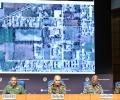
'We completely destroyed at least three posts, an ammunition depot, fuel storage facility, and gunnery, among other targets. Our retaliation was so devastating that it will take Pakistan at least 8-12 months to rebuild, possibly longer'

'The next two to three weeks will not be decided in Washington.' 'They will be decided in Tehran, in whatever calculation Iran makes about the costs of continued resistance against the costs of appearing to have yielded.'

US President Donald Trump's threats against Iran have drawn strong condemnation from Democrat leaders, who are calling for his removal from office, while some Republicans express concern.

The chairman of maritime company Safesea Group has described the attack on the US-owned crude oil tanker Safesea Vishnu, which resulted in the death of an Indian crew member, as "deliberate and calculated". He emphasised the need for governments to ensure the safety of commercial shipping lanes and seafarers.

The cost of the war is being counted not in the corridors of power in Washington or Tehran, but in Firozabad's darkened furnace rooms, Howrah's idle casting sheds, and a barbershop in Kochi where the wait is suddenly, inexplicably, an hour long, notes Prem Panicker in his must read blog on the Iran War.

'Refiners may soon be forced to adjust operations, curtailing runs as product exports stall and directing output solely to domestic markets.'

The LPG squeeze on India's restaurant sector is the quotidian face of a deeper crisis.

Alliances fight wars effectively only when they share an endgame. If Israel acted without US knowledge, then the military alliance is operating without real coordination at the level of strategic targeting. Neither picture is reassuring in a war that is no longer regional in its consequences. Prem Panicker continues his must read daily blog on the Gulf War.

Pakistan's military operation against the Afghan Taliban has reportedly resulted in significant casualties and destruction of infrastructure along the border, prompting calls for de-escalation from the UN.

This election is different. It is no longer simply about governance or welfare. It is about identity, fear, and who belongs. The BJP has successfully shifted the terms of the debate from what the government has delivered to who the real Bengali is and who is an outsider, points out Ramesh Menon.

Trump has said he would be present at the signing ceremony in Islamabad. Don't be surprised if the Pakistani hosts make it a grand event in the geopolitics of the region. Trump would love that, notes Ambassador M K Bhadrakumar.

...reopen for up to six months. Until then, the Strait stays nearly closed. The world pays. And no one, including the man who started this, can say when it ends, notes Prem Panicker in his must read blog on the Iran War.

The authorities confirmed that the security situation in the UAE remains stable and that all concerned entities are monitoring developments around the clock.

For weeks, the war skirted the edge of catastrophe without tipping over. Missiles flew, there was much destruction, commanders were assassinated, cities across the Gulf and even in Israel struggled to absorb the shock. But one line held: Energy infrastructure, the arteries of the global economy, remained largely untouched. That is no longer true. Prem Panicker continues his must read daily blog on the Gulf War.

Saudi Arabia and the UAE are actively pushing Trump to take the war to its bitter finish and 'erase' Iran's presence in the geopolitics of the region. Simply put, the two most powerful Sunni Arab oligarchies are on the same page as Israel. Such interference increases the risk of a breakdown in dialogue between the US and Iran, points out Ambassador M K Bhadrakumar.

Dubai's core promise -- that it is an oasis untouched by regional storms -- has been tested in full public view. The coming months will show whether investors view the attacks as a short-lived disruption or a deeper signal of lasting risk, points out Asif Ullah Khan.

'Islamabad feels it has no alternative, but to address the challenges from the Afghan-Taliban through an open war.'

Iran has rejected United States allegations that it is preparing attacks on American facilities, alleging that Washington, DC is attempting to escalate tensions in West Asia, Iranian state broadcaster Press TV reported.

North Korean leader Kim Jong Un frequently appears in public with his daughter Kim Ju Ae, signaling her potential role as his successor.

Reports indicate Pakistan targeted Bagram airbase in Afghanistan as part of Operation Ghazab lil Haq, following alleged Afghan Taliban attacks. The operation aims to address the failure to stop terrorist attacks originating from Afghan soil.
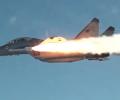
The Directors General of Military Operations of India and Pakistan firmed up the arrangement on stopping military actions on May 10 after four days of fierce offensives between the two sides that triggered fears of a wider conflict.

It is time for India to step up and get Russia, China and Europe to agree to a joint appeal to all combatants. Time is of essence, tomorrow may be too late, asserts Colonel Anil A Athale, former head of the history division, ministry of defence.

Will rising tensions between US-Israel and Iran threaten crude oil supply through the Strait of Hormuz, putting India's fuel prices, imports, and economic stability at risk?

Taking Kharg would give the US control over virtually all of Iran's oil exports and thus provide significant leverage, notes Prem Panicker in his must read daily blog on the Gulf War. It would also put American troops within range of Iran's remaining missiles, drones, and artillery on a piece of real estate that is just eight square miles in size, and just 15 miles from the Iranian mainland.

The 'rescue' operation occurred within kilometres of Iran's underground tunnel complex at Isfahan, assessed by the IAEA and US intelligence as holding a substantial portion of the country's 60 per cent enriched uranium stockpile. Retired senior US military officers have highlighted that the mission's footprint -- hundreds of special operators, multiple heavy-lift aircraft deep inside Iran -- appears outsized for recovering a single airman. Prem Panicker continues his must read blog on the Iran War.
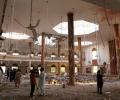
In 2025, India launched Operation Sindoor, a multi-domain combat mission against Pakistan in response to cross-border terrorism. The operation involved precision strikes, military retaliation, and diplomatic measures, marking a significant shift in India's security policy.

The Americans can occupy Bab el Mandeb, claim to have 'solved' the Strait of Hormuz crisis, declare victory that President Trump so desperately needs, points out Colonel Anil A Athale, former head of the history division, ministry of defence.

Nobody takes Pakistan seriously and therefore Pakistan's sudden mediating with almost immediate results of a ceasefire seems more contrived than real, points out Vice Admiral Biswajit Dasgupta (retd).

Two expatriate workers were killed after debris from a downed drone fell in an industrial area in the Sohar province of Oman.
